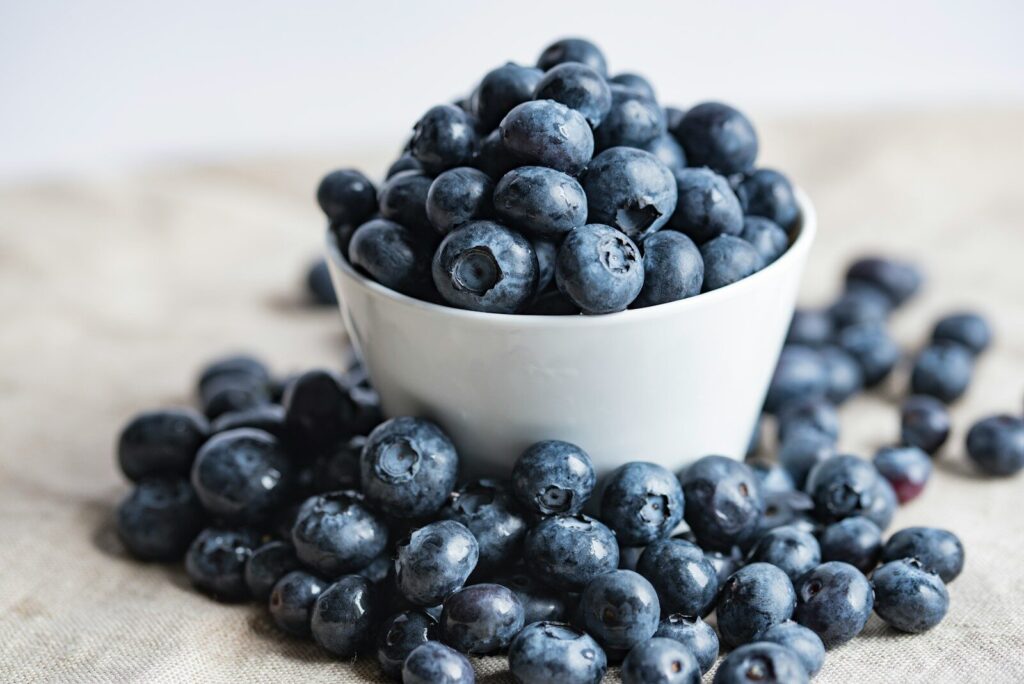
They are smaller than the plump blueberries in a plastic clamshell, they rarely look glamorous, and you usually find them in a frozen bag. Yet wild blueberries are one of the most impressive fruits you can buy.
Wild, or lowbush, blueberries grow naturally across northern regions such as Maine and eastern Canada. Because they are small, they have more skin relative to flesh – and the skin is where most of the pigment and antioxidants live.
Let us look at what makes these little berries special, what the research suggests and the easiest ways to make them a daily habit.
Key Takeaways
- Wild blueberries are smaller with more skin per bite, which concentrates anthocyanins.
- Frozen wild blueberries are widely available and keep their nutrients well.
- Research links regular blueberry intake with heart and brain health markers.
- They work in both sweet and savory dishes, from porridge to salad dressings.
What Makes Wild Blueberries Different
Cultivated highbush blueberries are bred for size, sweetness and shelf life. Wild blueberries are a genetically diverse mix of plants that have adapted to harsh climates. Stress from cold winters and poor soils encourages plants to produce more protective compounds, including the anthocyanins that color the berries deep blue and purple.
Since each berry is so small, a cup of wild blueberries contains far more individual berries – and therefore far more skin – than a cup of the big cultivated ones. That is one simple reason analyses often show higher antioxidant capacity for the wild variety.
The Anthocyanin Advantage
Anthocyanins belong to the flavonoid family of polyphenols. In the body, they do more than neutralize free radicals directly. Researchers believe they also influence cell signaling, blood vessel function and inflammation pathways.
Human studies with blueberries have reported improvements in blood vessel flexibility and some measures of memory and attention, especially in older adults. Results vary and more research is needed, but the overall picture is encouraging for a food that is also delicious.
Fresh or Frozen and Which Is Better
Most wild blueberries are frozen within hours of harvest because they are delicate and the season is short. This locks in color and nutrients. In practice, frozen wild blueberries are often the best choice for most people.
- They are available all year
- They usually cost less per serving than fresh berries
- They do not spoil quickly
- They thaw in minutes or go straight into smoothies
Avoid versions with added sugar or syrup. Plain frozen berries are all you need.
How Much Should You Eat
There is no official target, but many studies used roughly a cup of berries a day or a matching amount of freeze-dried blueberry powder. A half cup to one cup is an easy, realistic goal that fits into breakfast or a snack.
If you are new to eating more fruit and fiber, increase gradually and drink enough water to keep digestion comfortable.
Easy Ways to Use Wild Blueberries
Breakfast Stir frozen berries into hot oatmeal – the heat thaws them and creates a beautiful purple swirl. Add walnuts for crunch and healthy fats.
Smoothies Blend wild blueberries with Greek yogurt, a banana and a handful of spinach. The berries hide the green color completely.
Savory Ideas Simmer berries with balsamic vinegar and a little honey for a sauce that works with roasted vegetables, chicken or salmon. Or crush a few into a vinaigrette for a vivid salad dressing.
The Bottom Line
Wild blueberries prove that the most powerful foods are not always the flashiest. Keep a bag in your freezer, add a handful to something every day and you will have one of the simplest antioxidant habits there is.
Frequently Asked Questions
Are wild blueberries healthier than regular blueberries?
Both are nutritious, but wild blueberries tend to have a higher concentration of anthocyanins because they are smaller and have more skin relative to flesh.
Do frozen blueberries lose their antioxidants?
Freezing preserves most antioxidants very well. Some studies even suggest freezing may make certain pigments easier to extract because ice crystals break down cell walls.
Can I eat blueberries every day?
For most people, yes. A daily serving of blueberries is a healthy addition to a balanced diet. People on special diets or with specific medical advice should follow their clinician’s guidance.
This article is for general educational purposes and does not replace personal advice from a doctor or registered dietitian. Talk to a healthcare professional before making major changes to your diet or starting supplements, especially if you are pregnant, take medication or manage a health condition.